
History Watercolour Paper
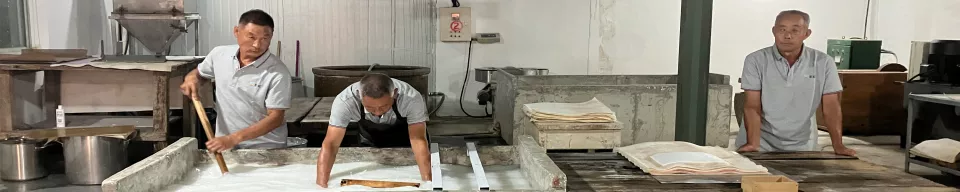
Cai Lun invented paper by mixing hemp, mulberry bark, and cotton with water and then pounding them into a pulp. The pulp was then spread out on a silk-screen and allowed to dry, forming a thin sheet of paper. Lun’s paper was a major improvement over previous writing materials, such as bamboo and parchment. It was cheaper, more durable, and easier to write and work on. As a result, it quickly became the preferred material for calligraphy, writing and the arts in China.
Between the 3rd and 6th century, papermaking had spread to Korea and Japan. In the 8th century, papermaking was introduced to the Islamic world, and by the 12th century, it reached Europe. The first European paper mill was established in Xàtiva, Spain in 1151. Papermaking quickly spread to other parts of Europe, and by the 15th century, paper was widely used throughout the European continent.
A short timeline of the milestones in the history of paper:
- 2nd century: Cai Lun invents paper in China in 105 BC.
- 3rd - 6th century: Papermaking spreads to Korea.
- 7th century: Papermaking introduced in Japan in 610, brought by the Korean monk Doncho.
- 8th century: Papermaking is introduced in the Islamic world: first paper mills established in Bagdad.
- 12th century: Papermaking reaches Europe; first paper mill established in Spain.
- 15th century: Johannes Gutenberg from Mainz, Germany invents the printing press around 1440, which leads to a dramatic increase in the production of paper books
- 17th century: The first North American paper mill is built in 1690 near Germantown, Pennsylvania.
- 19th century: Papermaking becomes more industrialized, and paper becomes more widely available and affordable.
Paper made from cotton pulp had a worldwide inimitable impact. It made it possible for many people to read, learn, write, make art, and it was essential to spread knowledge and culture more widely. Paper also played a key role in the development of printing and publishing, which in turn helped to spread the ideas and the arts from Renaissance to current days. The Chinese invention of paper is one of the most important and exciting technological advancements in human history. It has had a profound impact on the world, and it continues to play a vital role in our society today. Paper is one of the most widely used materials in the world; it is used for writing, making art, printing, packaging, and an incredible wide variety of other essential purposes. The art of making paper is one of the most important technological ancient inventions that we still enjoy and use in present times.
